Choosing Your Lake Minnetonka Location: Key Factors To Weigh
April 16, 2026
April 16, 2026
Trying to choose the right spot on Lake Minnetonka? That decision is often more complex than picking the home with the best view. If you are buying on or near the lake, the location you choose can shape everything from boating access and dock use to your commute and day-to-day lifestyle. This guide will help you weigh the practical factors that matter most, so you can narrow your options with more confidence. Let’s dive in.
Lake Minnetonka is not one uniform shoreline. According to the Minnesota DNR, the lake covers 14,004 acres and reaches a maximum depth of 113 feet. The Lake Minnetonka Conservation District also describes it as a 22.7-square-mile lake that stretches about 10.9 miles and touches 14 municipalities.
That matters because when you choose a location here, you are not just choosing water frontage. You are also choosing a specific bay, basin, shoreline type, and municipal setting. Those differences can affect boating patterns, zoning, services, and the overall feel of daily life.
The LMCD map identifies the municipalities around the lake as Deephaven, Excelsior, Greenwood, Minnetonka, Minnetonka Beach, Minnetrista, Mound, Orono, Shorewood, Spring Park, Tonka Bay, Victoria, Wayzata, and Woodland. Each brings a different local context, so it helps to compare homes with the full location picture in mind.
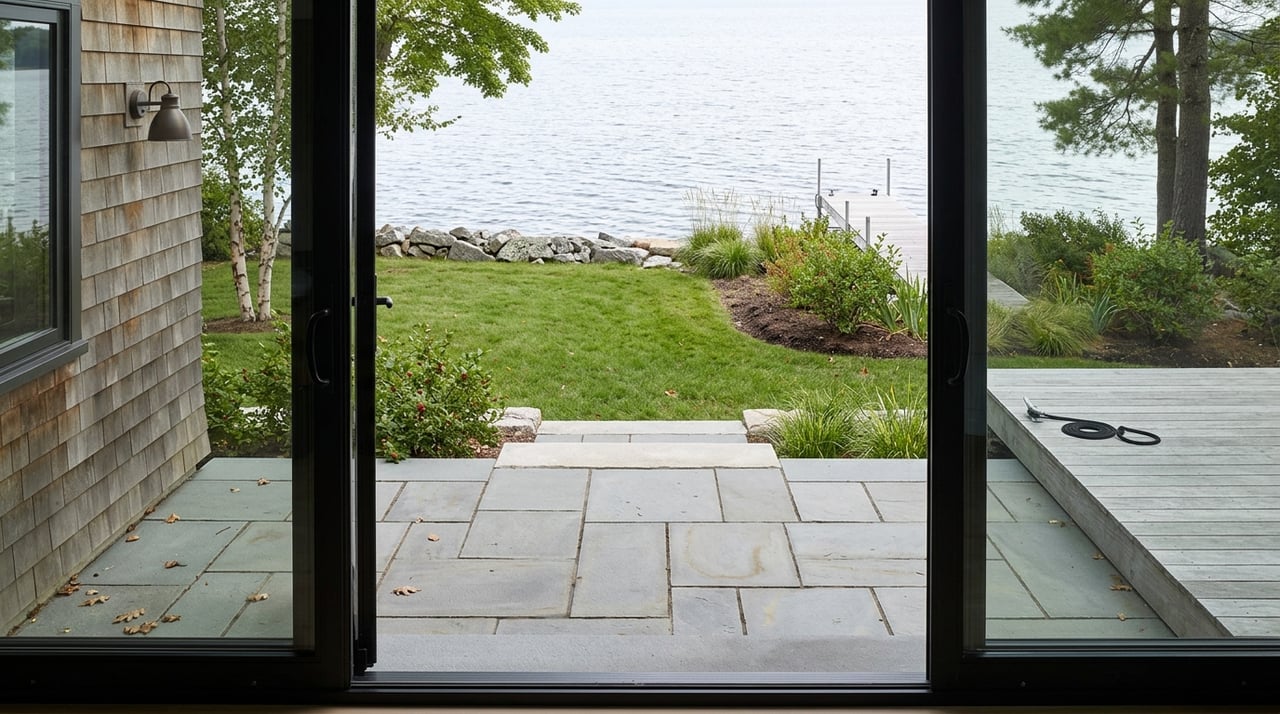
A beautiful shoreline does not always function the same way from one property to the next. Some homes sit on more open-water frontage, while others are located on protected bays, narrower channels, or quieter shoreline segments. That distinction can influence wave action, docking comfort, and how you use the water day to day.
Because Lake Minnetonka includes many basins and changing shoreline conditions, your use case should lead the search. If you want easy in-and-out boating, entertaining from the dock, or calmer water for certain activities, the exact shoreline setup matters as much as the view.
Dock rights are one of the most important things to confirm before you buy. The LMCD guidance for shore owners notes that easements can create shared riparian rights and can affect setbacks and dock allowances. In some cases, access may be deeded, shared, tied to an easement, or part of a multiple-dock arrangement.
This is where details matter. A property may appear to offer straightforward lake access, but the legal structure behind that access can change what you can actually do with the shoreline. If you are comparing properties, ask who controls the dock use area and whether any shared-use structure or variance is involved.
On Lake Minnetonka, water depth varies significantly by bay and can shift with the season and precipitation. The LMCD specifically cautions that water may be lower in fall than at ordinary high water. That means frontage width alone does not tell you whether a property fits your boat, lift, or dock plans.
If boating is a priority, compare the actual depth at the property with your intended watercraft setup. A location that works well for one owner may be far less practical for another, especially later in the season.
Minnesota shoreland rules are administered through local zoning rather than directly by the state. The DNR explains that local ordinances can be more restrictive than statewide standards, and these rules are designed to keep structures and other development farther from the shoreline.
For you as a buyer, that means future plans matter. If you are thinking about remodeling, adding outdoor features, or changing shoreline improvements, it is smart to review city-specific shoreland restrictions early in the process.
Not every shoreline situation is simple. The LMCD residential dock guidance states that single-family residential properties generally do not require annual permits or licenses, but shared or higher-density situations may. That can include setups involving five or more watercraft, permanent docks, dock extensions during low water, or nonconforming uses.
This is an important distinction if you are comparing private frontage with shared-access or more complex lake arrangements. You want to know whether the property’s use depends on a special licensing framework or whether it is more straightforward.
Your boating experience is shaped by more than your dock. The LMCD wake guidance says there are year-round slow/no-wake zones, including within 300 feet of shore, docks, swimmers, bathing areas, anchored watercraft, and other structures. There are also additional restrictions in channels and certain bays.
If you picture active boating right off your shoreline, these rules are worth understanding. They help protect property and reduce erosion, but they also affect how certain areas of the lake feel in practice.
If you trailer boats, host guests, or want backup launching options, public access matters. The Lake Minnetonka map shows access points including Grays Bay, Wayzata, Spring Park, Mound, Hendrickson, Maxwell Bay, Halstead Drive, Surfside Park, Tuxedo Road, Carsons Bay, Eastman Lane, and the Headwaters Canoe access.
Parking rules and launch setups vary by site. Some launches are trailer-focused, while others have limited parking or restrictions on trailer use. If public launching is part of how you expect to use the lake, proximity and convenience should be part of your location analysis.
Navigation on Lake Minnetonka is highly location-specific. The LMCD maps page notes that the lake has 20 bridges, with clearances ranging from 5'8" at Carson’s Bay to 18'3" at the Narrows bridge.
That means boat height and route planning can directly affect usability. A home may look ideal on the map, but if your boat cannot comfortably clear the bridges between your dock and the part of the lake you use most, the location may not be the right fit.
The lake’s channels are shaped by both land and underwater features like shallow areas and rocks. The LMCD explains that navigation markers and buoys help identify routes and hazards, which makes local familiarity especially valuable.
The DNR also notes that Lake Minnetonka is heavily used, with heavy boat traffic and crowded ramps at popular times. For buyers, this is part of the reality of ownership. Your location can influence how easy or busy your boating routine feels.
Commute convenience can differ depending on where you land around the lake. Based on the Hennepin County lake map, locations on the north and east sides often connect more naturally to I-394 and Highway 12, while south-shore communities tend to orient more toward Highway 7 and related local routes.
If you commute regularly, this may become just as important as frontage details. A lake location that feels perfect on weekends may be less ideal if it adds friction to your weekday routine.
Some buyers want a shoreline setting with easy access to shops, dining, and a compact downtown. Wayzata describes itself as 11 miles west of Minneapolis at the northeast tip of the lake, with a downtown business district, restaurants, boutiques, open space, and a historic lakeside village feel.
Excelsior offers a different south-shore experience, describing itself as about 20 minutes from downtown Minneapolis with specialty boutiques, restaurants, a historic theater, and a small-town atmosphere. If off-water amenities matter to you, these kinds of distinctions can help narrow the right fit.
For some buyers, lake living is about more than boating. Shorewood highlights about 101 acres of parkland, and the Lake Minnetonka Regional Trail runs through the city from Hopkins to Victoria.
That kind of trail and park access can shape your everyday lifestyle in a meaningful way. If walking, biking, or easy access to green space is high on your list, it is worth comparing communities through that lens too.
When you compare Lake Minnetonka properties, it helps to use the same checklist each time. That keeps emotion from taking over too early and helps you spot tradeoffs clearly.
Here are smart questions to ask as you evaluate a location:
On Lake Minnetonka, two homes can have similar price points and very different ownership experiences. The details behind frontage, access, water depth, regulations, and daily convenience often make the difference between a location that looks right and one that truly fits your life.
That is where clear guidance matters. When you work with Sheryl Deppa, you get hands-on, start-to-finish support built around practical decision-making, local knowledge, and disciplined representation. If you are weighing where to buy around Lake Minnetonka, Sheryl can help you compare options with a sharper lens and move forward with confidence.
Stay up to date on the latest real estate trends.
Work with Sheryl Deppa, a trusted Minnetonka real estate professional known for attentive service and local expertise. She’s committed to guiding you smoothly through every step of buying or selling your home.